

Too Many Clothes, Not Enough Closet? Here's How to Store Them Without Wrecking Them
Let's be honest: most of us own way more clothes than we did ten or twenty years ago. Online shopping, seasonal sales, that "just one more sweater" feeling... it adds up fast. And here in Edmonton, we basically need two full wardrobes: one for our short, glorious summers and one for the six months of parkas, toques, and snow boots.
The problem isn't just space. It's what happens to clothes when they don't have a proper home. A lot of the clothing people end up tossing isn't worn out at all. It got squished, stretched, faded, or chewed on while it was stuffed in a bin somewhere. So let's talk about how to store your stuff so it actually survives until next season.
Start with the closet you use every day
Here's a quick test. Grab a hanger and slide it along the rod. Does it move easily? Great. If you have to wrestle it free, your closet is overstuffed, and your clothes are paying for it with wrinkles, crushed shoulders, and fabric that never gets a chance to breathe.
Aim for a little breathing room between every hanger. If you can't get there, that's your sign that something needs to leave the closet, whether that's out-of-season clothes heading to storage or pieces heading to donation.
The big seasonal swap (a very Edmonton thing)
When spring finally shows up (and sticks around), your bulky winter gear needs somewhere to go until October. And come fall, your shorts, sundresses, and sandals need to step aside.
The easiest approach is to do a full swap twice a year. Pull out everything that clearly belongs to the other season and pack it away properly. Your everyday closet instantly feels bigger, and it's so much easier to get dressed when you're not digging past beach cover-ups in January.
Clean everything before it goes into storage
This one's non-negotiable. Wash or dry clean everything before you pack it away. Body oils, sweat, and tiny food spots might be invisible now, but after a few months in storage they can set into stains. Dirty fabric also attracts pests, and moths especially love wool, cashmere, and other natural fibres.
While you're at it, do a quick repair check. Sewing on a loose button now takes two minutes. Finding it missing next fall when you're running late is a whole different mood.
Pick the right containers
Skip cardboard boxes. They soak up moisture and are basically an open invitation to bugs. Go for sturdy, lidded plastic bins instead. Clear ones make it easy to see what's inside, and a simple label ("Winter – Sweaters," "Summer – Kids") will save you a lot of guessing later.
Go easy on vacuum bags. They're tempting because they shrink everything down, but squeezing fabric flat for months can leave deep creases and misshapen clothes, especially puffy jackets and knits. They're fine for a short trip, not so great for long-term storage.
Ditch the dry cleaner's plastic. Those thin plastic covers trap moisture and can actually discolour your clothes over time. For coats, suits, and dresses that hang, use breathable cotton garment bags. An old clean pillowcase or cotton sheet works in a pinch too. The key word is breathable, not sealed.
Add some cedar for wool. Cedar blocks or a cedar-lined space can help keep moths away from your favourite wool sweaters. Just remember it's a bonus, not a magic fix. Clean clothes in a clean, dry spot is still your best defence.
Location matters more than you think
Where you store things is just as important as how. The garage is a tough one in Edmonton. It swings from freezing to scorching and back again, and those temperature changes are hard on fabric. Unfinished basements can get damp, and attics are usually too hot. A good bin won't save your clothes from a bad room.
If you can, keep off-season clothing somewhere inside the heated part of your home: a spare closet, under the bed, or on upper shelves in your main closet.
Use the swap as your declutter moment
Every seasonal changeover is the perfect time to be honest with yourself. If you didn't touch something all last winter, chances are you won't wear it this winter either. Instead of just asking "do I need this?", try asking why you haven't worn it. Doesn't fit? Uncomfortable? Not really your style anymore? That answer usually makes the decision easy.
Donate what's still in good shape and let it go. Less stuff means less to store, and more room for the clothes you actually love.
Make your closet work harder
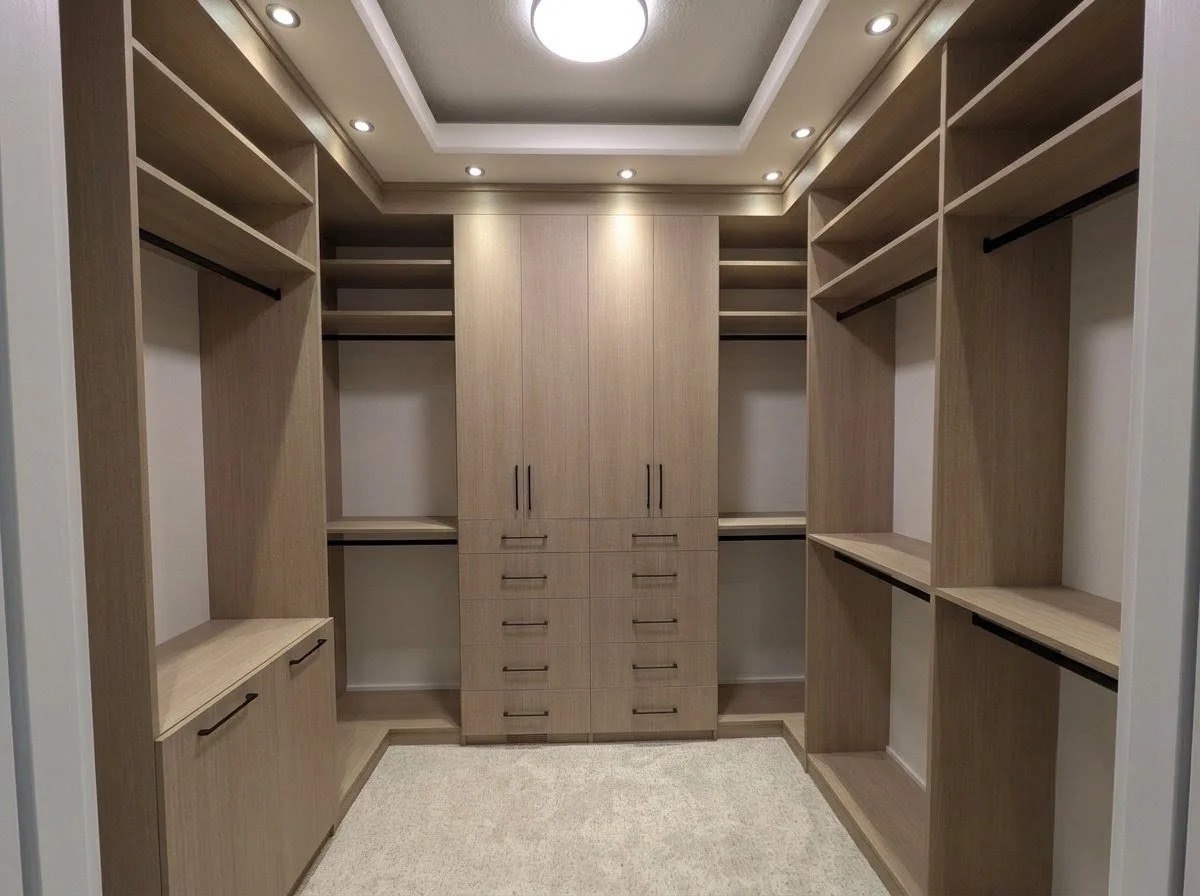
Here's the good news: you don't necessarily need a bigger closet. You need a smarter one. A well-planned layout can give you double hanging for shirts and pants, dedicated shelves for folded sweaters, drawers for the small stuff, a proper spot for shoes and boots, and high shelves for off-season bins so they're stored safely but still easy to reach.
That's exactly what we do at The Custom Closets. We're a Canadian, family-owned business right here in Edmonton, and we design walk-in, reach-in, and built-in closets around the way you live, plus mudrooms that finally give all that winter gear a home. We'll measure your space, talk through what you need, and show you a 3D design before anything gets built.
Ready to stop fighting with your closet? Get your free quote, call us at (825) 888-2281, or email thecustomclosets@gmail.com.
What Are the Best Materials for Custom Closets and Fine Cabinetry in Edmonton?
When investing in custom storage for your home, the most common question we hear is: What are the best materials for custom closets and cabinetry?
The best materials for custom closets and cabinetry include 3/4-inch melamine for highly durable, scratch-resistant interior boxes, and Baltic birch plywood or solid hardwoods like maple and oak. For maximum longevity, these materials must be paired with premium soft-close hardware.
At The Custom Closets, we manufacture and install high-end storage solutions across the Edmonton area. Because our local climate experiences significant humidity swings from dry winters to humid summers, choosing the right materials isn't just about aesthetics—it is about ensuring your cabinets don't warp, sag, or fail over time.
1. Cabinet and Closet Boxes: The Foundation
The "box" or "carcass" of your closet system is the structural frame. If the frame is weak, the shelves will sag.
3/4-Inch Melamine: This is the gold standard for custom closet interiors. Unlike the cheap, flimsy 1/2-inch or 5/8-inch particleboard found in big-box store kits, 3/4-inch melamine provides incredible structural integrity. It will not bow under the weight of heavy winter coats or stacked jeans. The thermally fused surface is also highly resistant to scratches, moisture, and stains.
Baltic Birch Plywood: For heavy-duty garage cabinetry, wet bars, or premium kitchen cabinet boxes, Baltic birch plywood is exceptionally strong. It holds screws incredibly well and resists the expansion and contraction caused by Edmonton’s changing seasons.
2. Door and Drawer Fronts: The Aesthetic Finish
The fronts of your cabinets and drawers dictate the entire style of the room and take the most daily wear and tear. We offer a massive range of customizable options to fit any design vision:
Thermofoil (Shaker & Flat Styles): Thermofoil is an incredibly popular and durable choice for custom closets. It involves applying a seamless, highly durable finish over a finely routed core. We offer timeless Shaker-style fronts for a classic, transitional look, as well as Flat (slab) panels for a sleek, ultra-modern aesthetic. Because the finish wraps seamlessly around the edges, it is highly resistant to chipping and moisture.
Endless Customization (100+ Colors & Textures): You are never limited to just basic white. We offer more than 100 different colors, including stunning, realistic woodgrain textures, matte finishes, and high-gloss options. Whether you want the rich look of walnut, a clean modern gray, or a bold accent color, we can match your home's exact aesthetic perfectly.
3. The Unsung Hero: Premium Hardware
You can build a closet out of the finest wood in the world, but if the hardware is cheap, the closet will feel cheap. At The Custom Closets, we never cut corners on the moving parts.
Side-Mount Soft-Close Guides: For robust performance and exceptional durability, we use heavy-duty side-mount guides with built-in soft-close technology. These are perfect for deep storage or heavy drawers, ensuring a quiet, gentle glide every single time without slamming.
Undermount Drawer Slides: For a seamless, high-end look where the hardware is completely hidden, we use premium undermount drawer slides with soft-close mechanisms. A hallmark of expert craftsmanship is precision spacing.
Soft-Close Hinges: We equip our cabinet doors with premium soft-close hinges. This ensures your custom closet doors gently and silently glide shut every time, preventing slamming, minimizing wear and tear, and adding an everyday touch of luxury to your space.
Ready to Transform Your Space?
Whether you are looking to optimize a master walk-in closet or build custom cabinetry for your mudroom or kitchen the quality of the raw materials dictates the final result. By manufacturing locally in the Edmonton area, we ensure every cut, edgeband, and drilled hole meets the highest standards.